Last updated: 7 October 2026
A new kitchen is one of the most expensive jobs in a home, and plenty of kitchens that look tired are perfectly sound underneath. Painting the cabinets can change how a kitchen looks and feels for a fraction of the cost and disruption of a full replacement. But it isn't the right answer for every kitchen. Here's how to tell which route suits yours, and what a good painted finish involves.
When painting is the better choice
Painting makes sense when the cabinet boxes and doors are in sound condition, the layout works for you and what bothers you is the colour, the finish or the age of the style. Solid wood and well-made MDF doors take paint well, and so do many laminated surfaces when they're prepared with the right primer. Painting is also quicker and less disruptive than ripping out a kitchen, produces far less waste and lets you keep the worktops, appliances and layout you already have.
When replacement is the better choice
Replace the kitchen if the cabinets are damaged beyond a good repair: water-swollen boards, doors that have warped or split, hinges that no longer hold in crumbling carcasses, or units that sag. It's also the right answer if the layout doesn't work, if you need more storage or a different arrangement, or if the worktops and appliances are failing as well. Painting makes a kitchen look better, but it can't change how it works.
What painting can and can't change
Painting can transform the colour and the finish, and fresh handles can change the style as well. It can cover dated wood tones and tired or grubby finishes. It can't change the size or shape of doors, move units, add storage or repair structural damage. If you like the layout but not the door style, new doors on the existing carcasses are a middle route, and they can be painted too.
How a good job is done
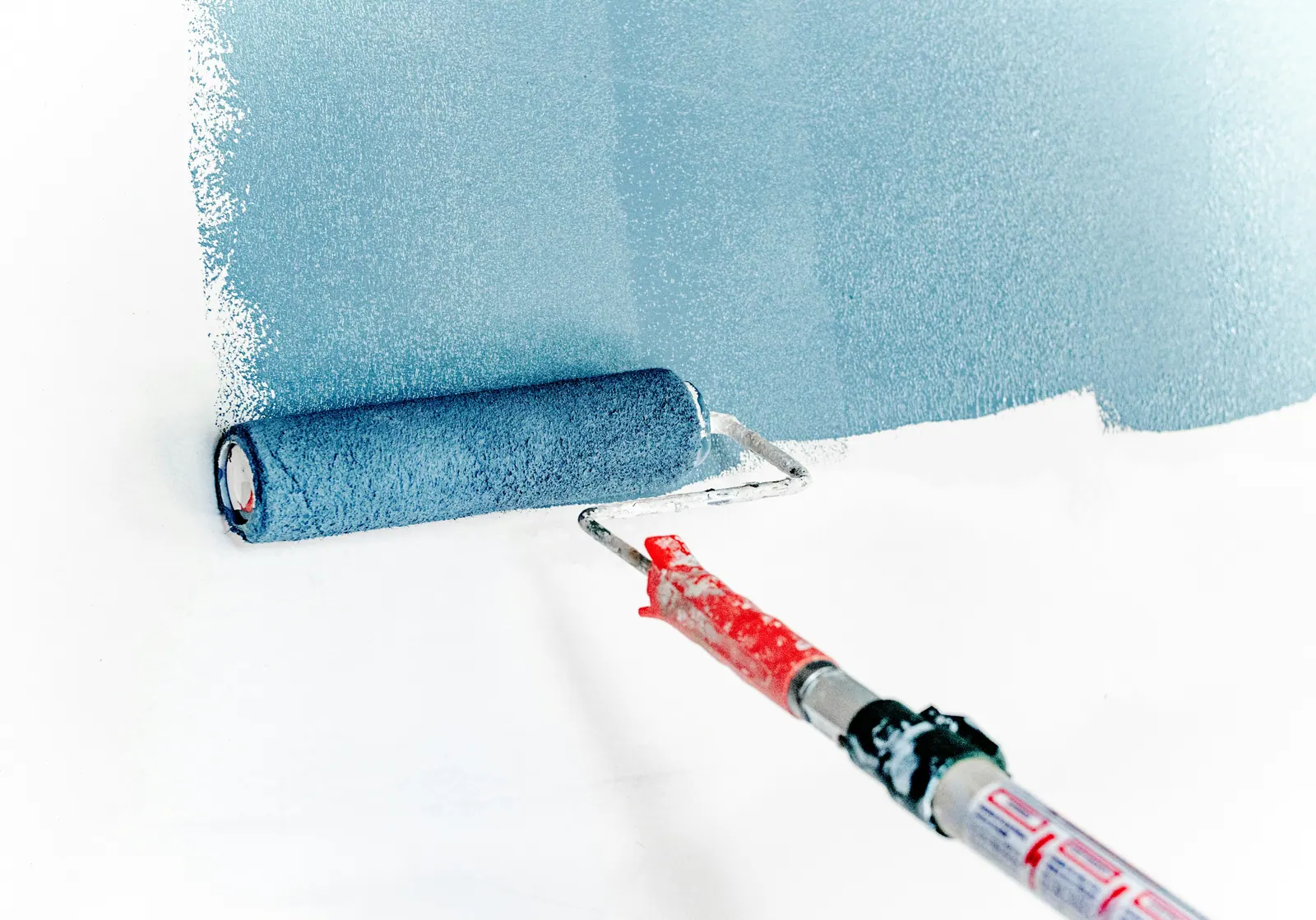
A durable painted kitchen depends almost entirely on preparation. Doors and drawer fronts are removed where possible, and every surface is cleaned with a degreaser, because years of cooking leave a film that stops paint from bonding. Surfaces are sanded to give the paint a key, any dents or chips are filled, and a bonding primer goes on before the topcoat. The finish can be sprayed for a smooth, factory-style result, or applied by brush and roller where that suits the job better. The paint then needs time to harden before heavy use.
Which surfaces can be painted
Solid wood, MDF and many laminates can be painted if they're prepared properly. Some surfaces need more thought: peeling vinyl wrap, water-damaged board and heavily textured doors may not be worth painting. If you're not sure what your cabinets are made of, say so when you ask for a quote, and send photos, particularly close-ups of the edges and any damage.
How long a painted kitchen lasts
It depends on the preparation, the paint and how hard the kitchen is used. Edges, handles and the doors around the hob and sink take the most wear, and they're where any failure shows first. A hard-wearing finish applied over a properly prepared, degreased surface can look good for a long time, and small chips can be touched up. A rushed job over a greasy surface is what peels. Ask how the decorator prepares the surfaces, because that tells you more than the price does.
How the costs compare
Painting is usually considerably less than a new kitchen, because you're paying for preparation and finishing, not for new units, fitting and disruption. The exact figures depend on the number of doors and drawers, their condition and the finish. The best way to compare is to get a quote for painting and a quote for replacement, and look at what each one actually delivers.
Questions to ask a decorator
Before you agree to a job, ask:
- how the surfaces will be cleaned and prepared
- which primer and paint will be used, and why
- whether it will be sprayed or brushed, and where the work happens
- how long the doors will be off, and how long before the kitchen can be used normally
- how hinges, handles and edges are handled
- what's included in the quote, and how any extra work is agreed
Don't forget the finishing touches
New handles, updated hinges, a repainted wall and a new splashback can lift a painted kitchen a long way. If the worktops are tired, think about whether to leave them, treat them or replace them, because they'll be the first thing people notice next to freshly painted cabinets. Bring these into the plan from the start, so the colours and finishes work together.
Thinking about painting your kitchen? Use the quote form to tell us what you have, and attach photos of the cabinets, the doors and any damage. We'll come back with a free written quote that sets out the preparation and the finish.